Serious Horsehair Plaster Repair
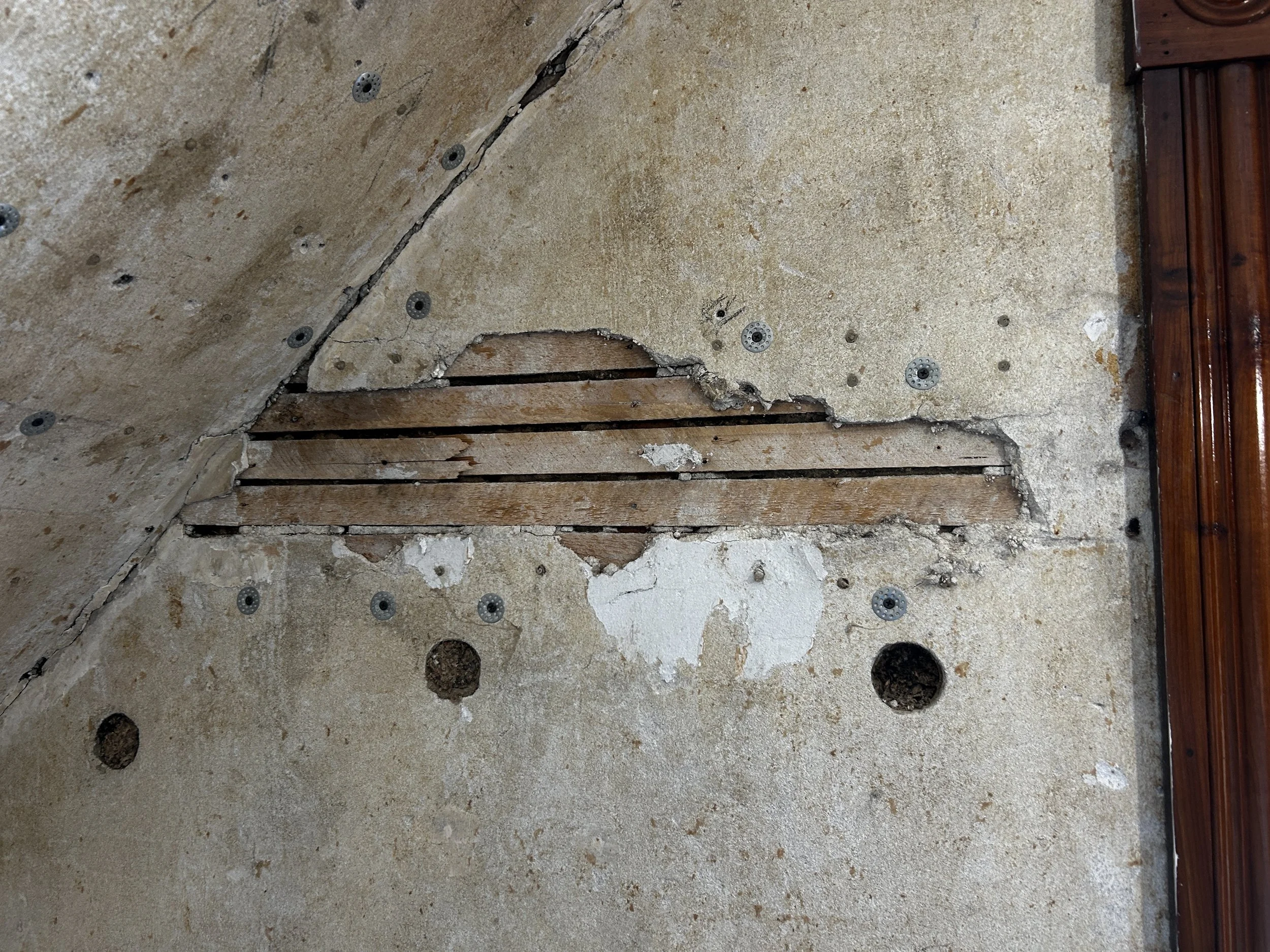
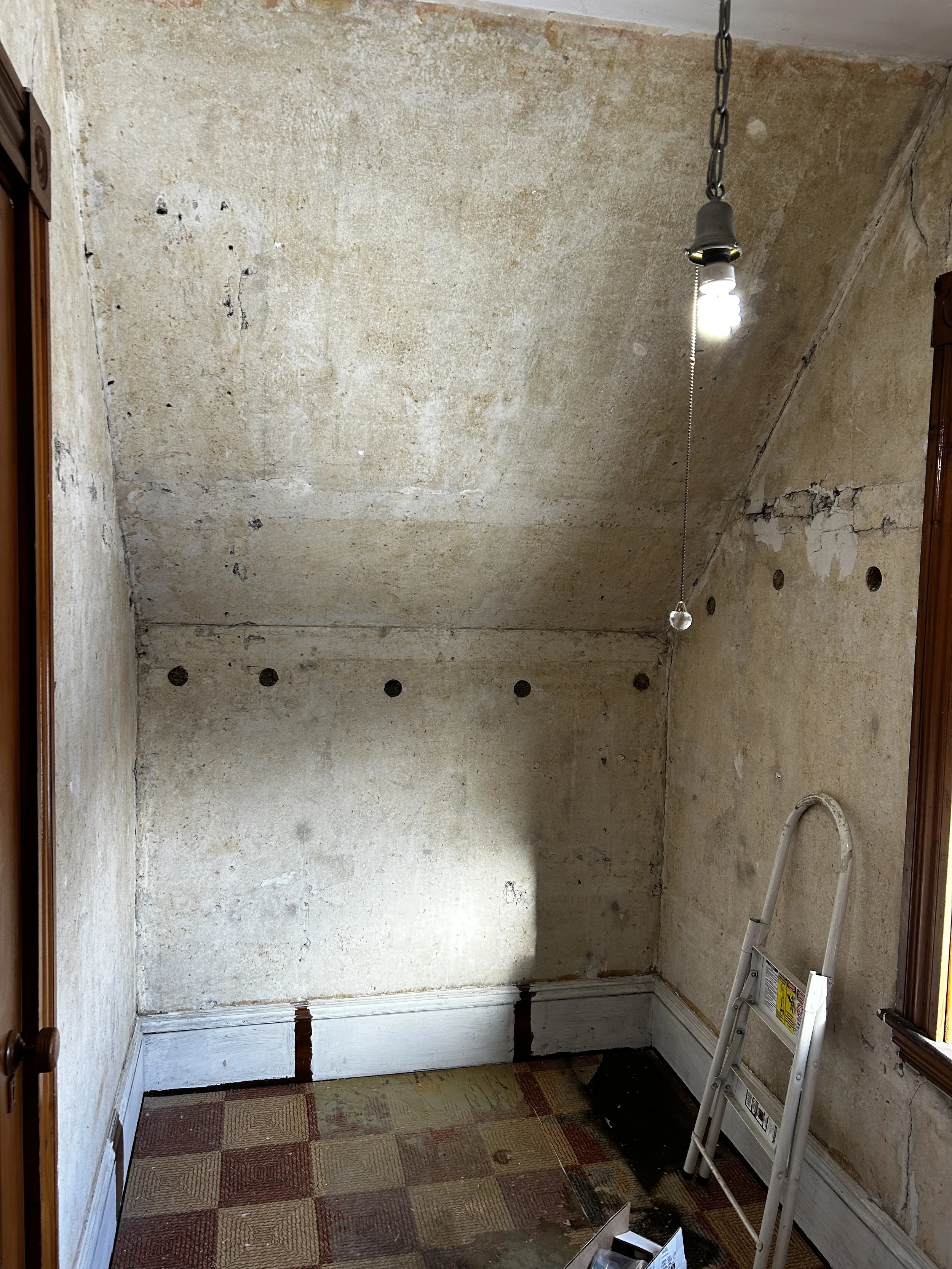
It has been some time since I posted. I recently completed a horsehair plaster repair in a closet. There were areas that the plaster was completely crumbling. This had to be totally removed. Also, large sections of the wall had unkeyed (no longer attached to the lahte, and moves when pressure applied) from the lathe.
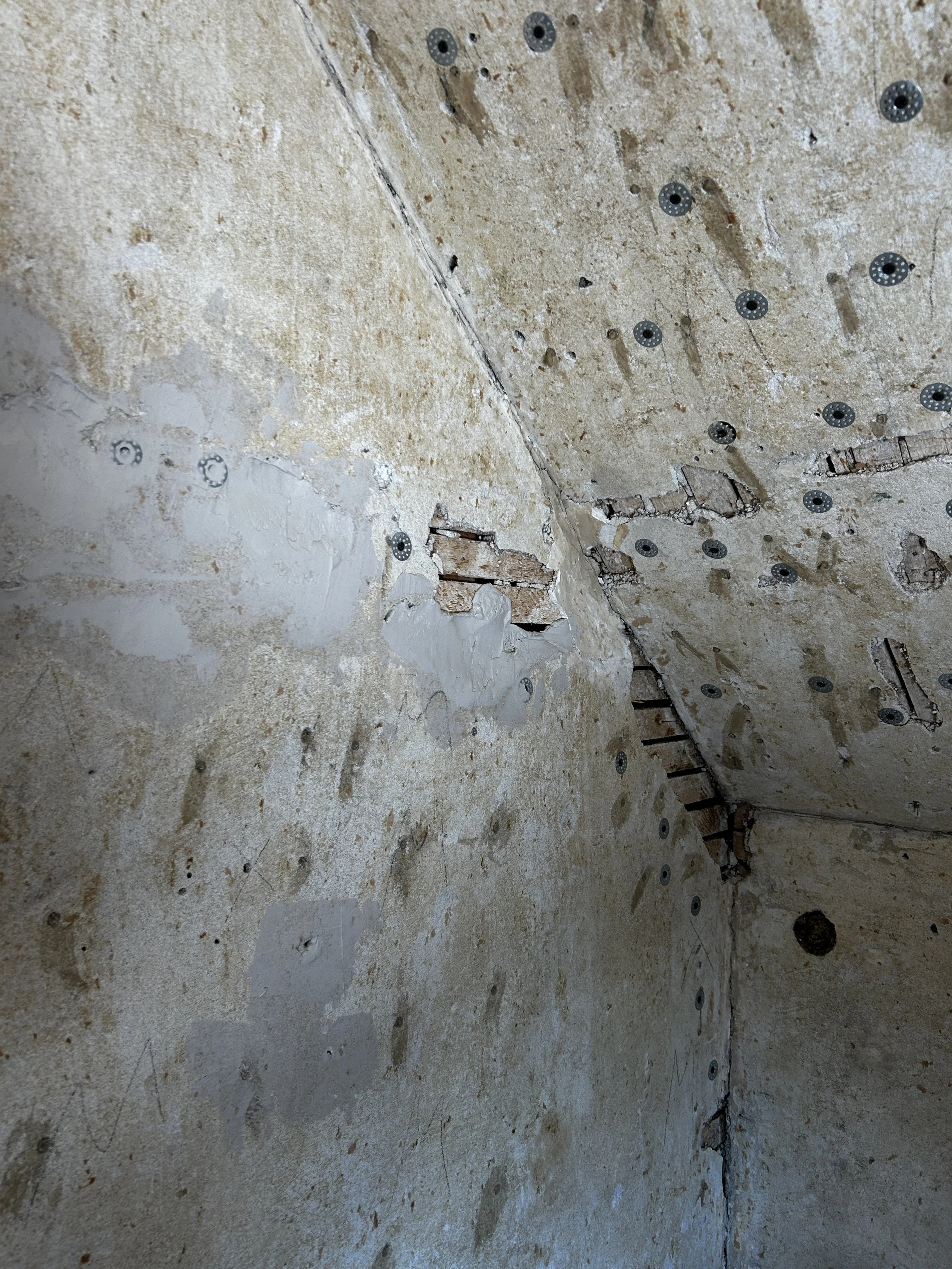
To fix the unkeyed plaster I had to drill holes, using a masonry bit. I had to make sure that lathe was under the hole created. If not, I drilled another hole until I hit wood. Usually this is easy. Once I hit I would move mover horizontally with the drill. However, on this job it took me some time to realize that the slanted wall on was not done properly. The lathe was vertical.
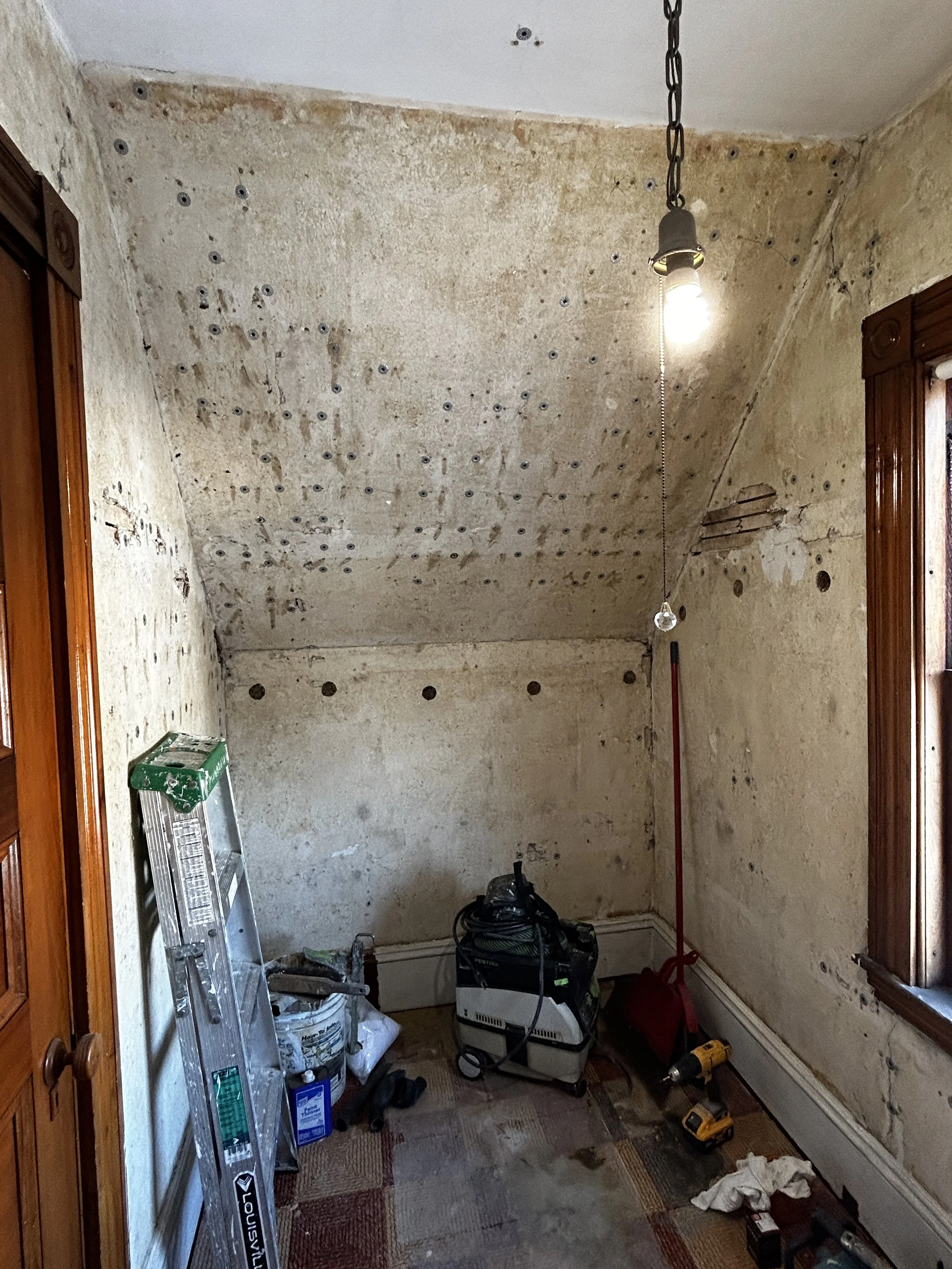
Once the holes were made, they were vacuumed out, construction glue was injected into the hole (I used Loctite) and then the loose plaster was screwed onto the lathe suing plaster (sometimes called ceiling) buttons.
The next day, the screws are removed. However, these walls were in such poor condition that I had to leave many of the plaster buttons in the wall to make it more stable. Also, all of the construction adhesive that had squirted out of the drill holes had to be removed.
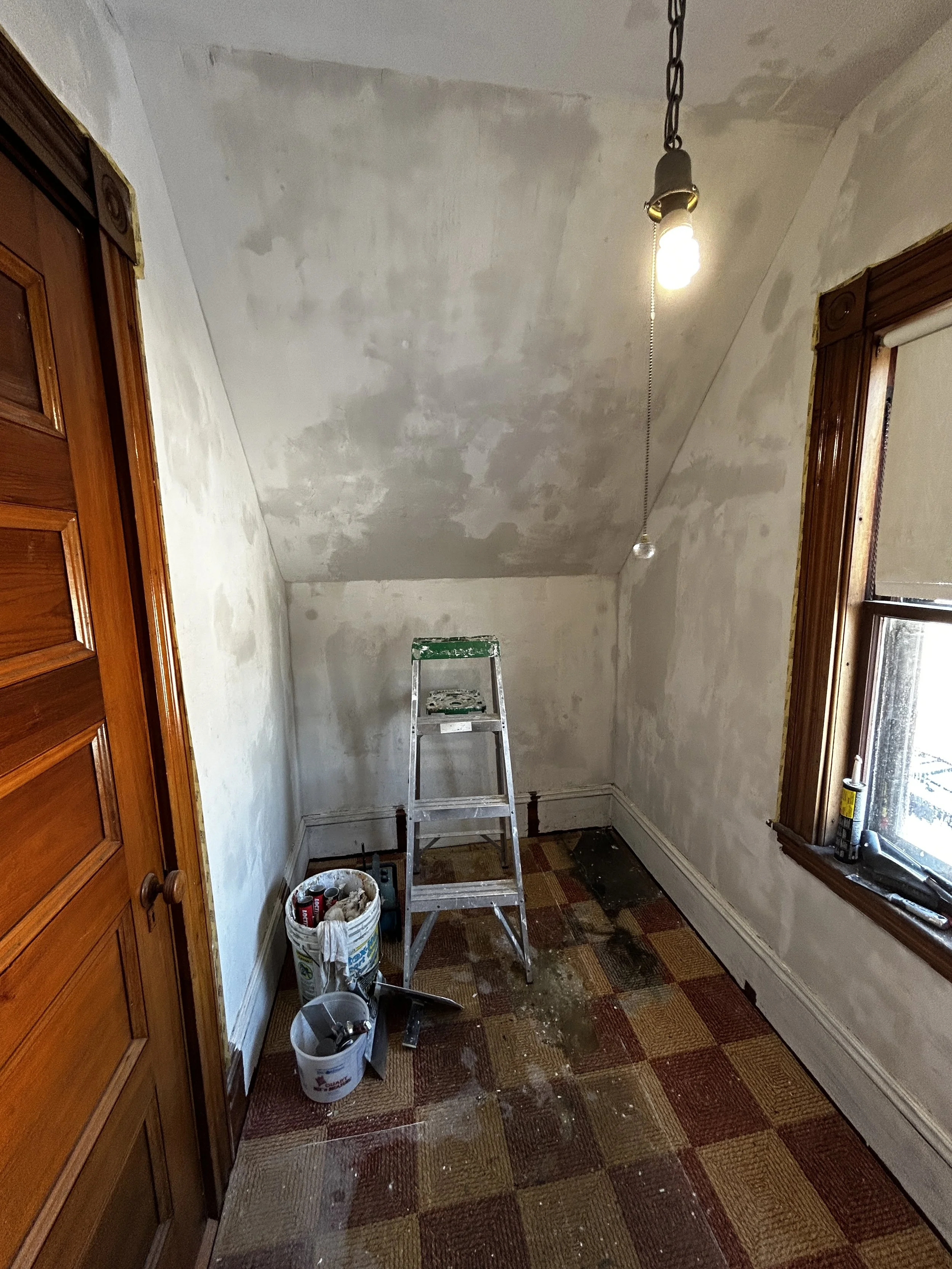
The customer wanted an smooth surface on the walls. So instead of just patching the cracks and holes I put hot mud (joint compound that is mixed with water and dries fast) on the entire wall.
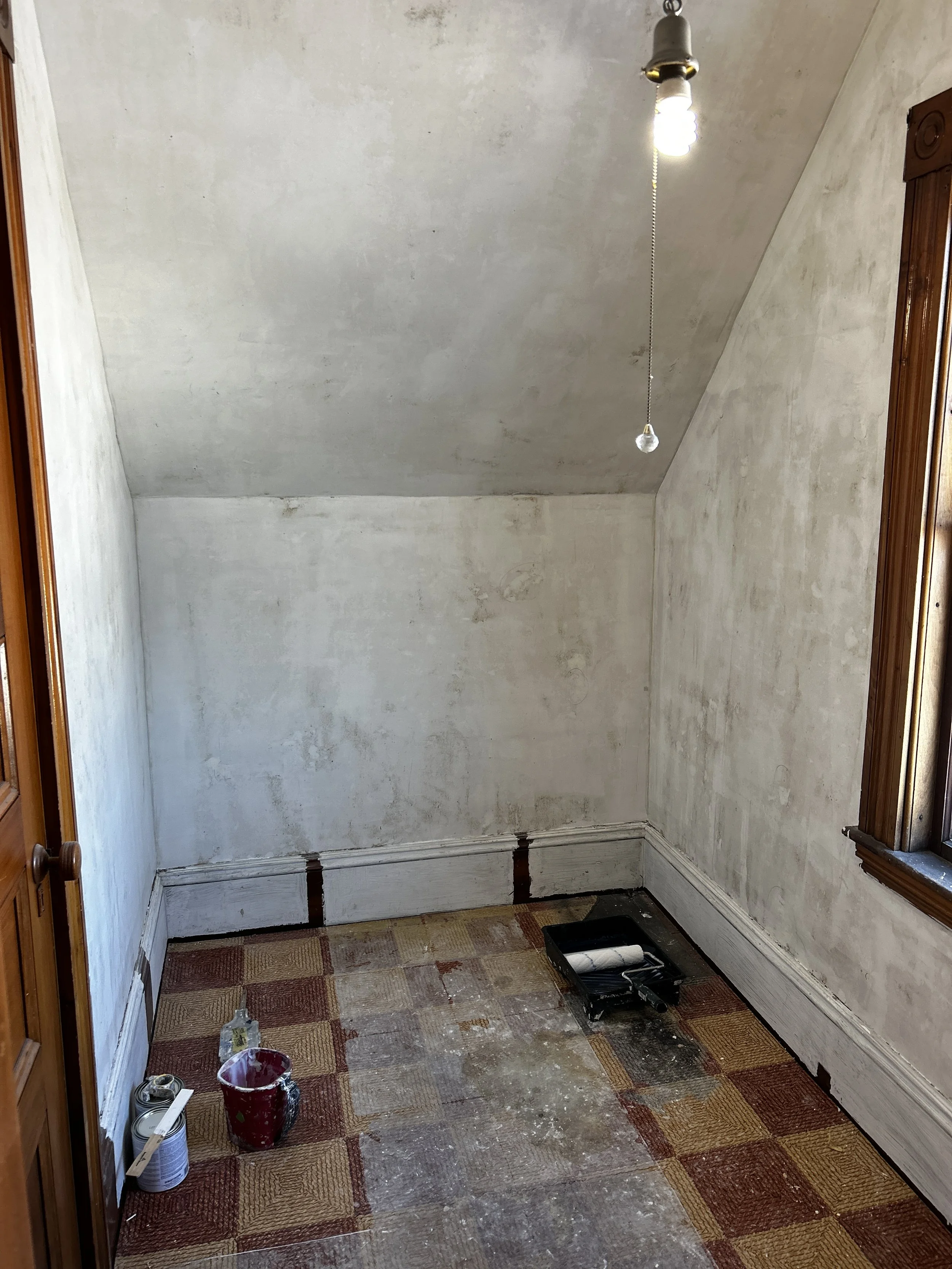
The next day the walls were sanded, dusted, and primed with Gardz.
These walls are far from perfect. They are fairly smooth, but they are far from flat. This is essentially due to all of the plaster buttons that I had to cover up in a small room. Also, when I was done with the sanded of the joint compound the walls were essentially white. Gardz is a specialty primer that is usually used to seal damaged drywall before making repairs. It is also used to seal wallpaper paste residue before painting. I did neither on this job. The homeowner removed the wallpaper and there appeared to be no residue. However, I have of late been very unhappy with the adhesion of the primers that I have used on joint compound. Gardz soaks into the joint compound and adhesion is great. But it is a clear and very watery primer. For some reason, in areas where the joint compound was thin on the walls, the old horsehair plaster is visible on the wall. The walls still fell smooth though.